
English| EUR
Suggested for you
More currencies
Choose a language
The Blue Eye sits at 700 meters in the Accursed Mountains, where altitude governs every forecast. Weather patterns shift quickly in the Albanian Alps, and conditions at the trailhead rarely match what you'll encounter at the spring itself. This guide covers seasonal windows, temperature ranges, and the climate realities that shape every hike into Theth National Park.
Quick answer
The Blue Eye in Theth National Park is accessible year-round with free entry, but weather varies sharply by season. Summer months from June through September offer stable conditions with daytime temperatures between 18°C and 28°C at the spring elevation, while winter brings snow cover from December through March with temperatures often below freezing. Spring and autumn present moderate temperatures but higher rainfall, particularly in May and October when afternoon storms are common in the Albanian Alps.
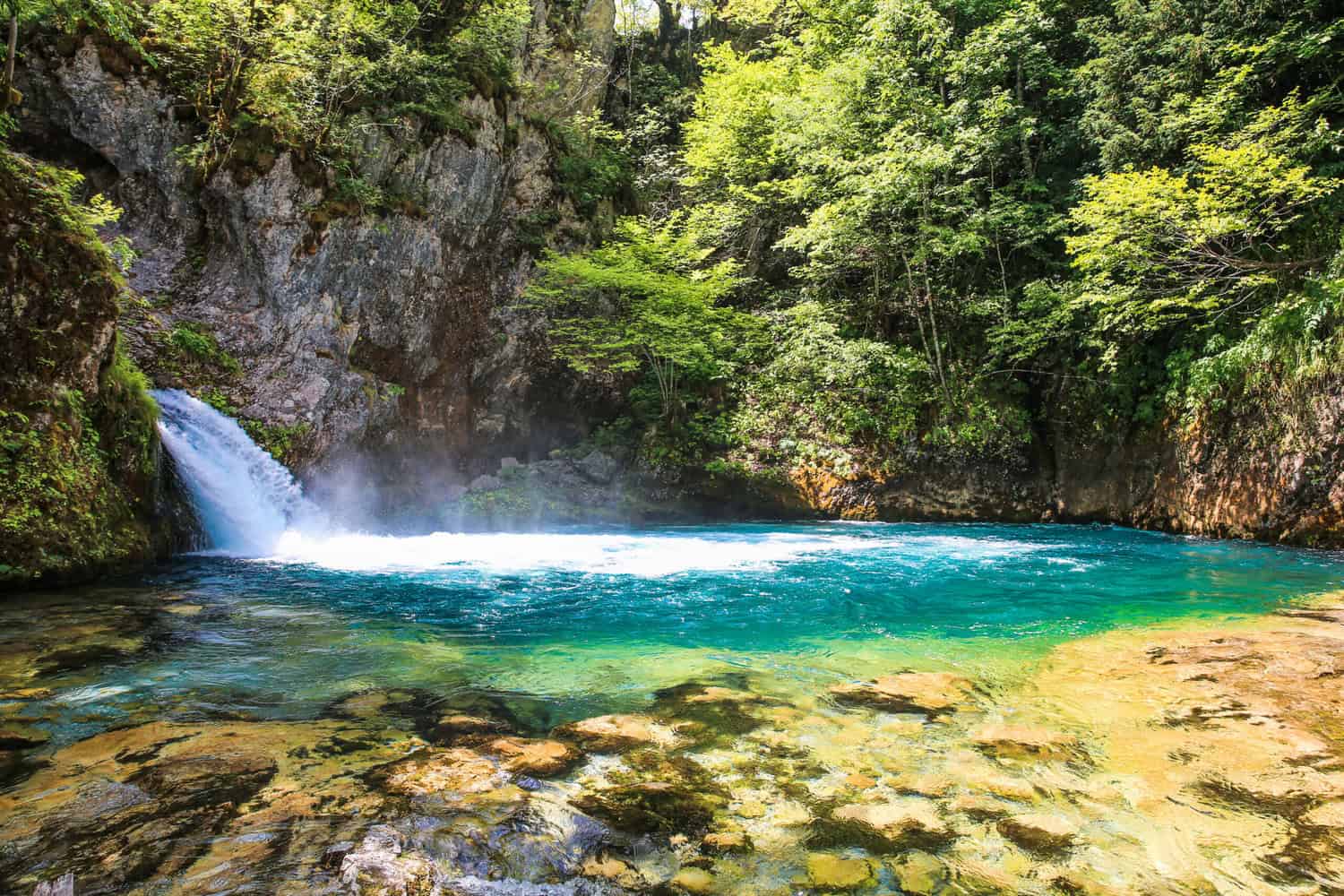
The spring's water temperature holds steady at 8°C to 10°C throughout the year, fed by snowmelt and underground aquifers that insulate it from seasonal swings. That constancy makes the thermal contrast with air temperature one of the site's defining sensations—refreshing in July, brutal in January. Theth Blue Eye weather follows the broader climate pattern of the Accursed Mountains: a continental alpine system with pronounced seasonal extremes. The valley floor receives approximately 1,800 millimeters of precipitation annually, most of it falling between October and May. Summer months are comparatively dry, though isolated thunderstorms can develop over the peaks by mid-afternoon, especially in July and August when convective heating is strongest. The trail to the spring crosses two stream fords that swell after rain, and what takes twenty minutes in dry conditions can require an hour of careful navigation when water levels rise. Winter transforms the landscape entirely. Snowfall begins in November and accumulates through March, with depths exceeding two meters in sheltered areas near the spring. The trail becomes impassable without snowshoes or skis, and avalanche risk on the surrounding slopes requires local knowledge. By April the snow begins to recede, but meltwater makes the path muddy and unstable well into May. The spring itself remains visible through winter, its deep blue standing out against the white, though reaching it safely is a different matter. Autumn offers the most stable alpine weather in Theth National Park, with September typically delivering clear skies, moderate temperatures, and minimal rainfall. The beech and hornbeam forests surrounding the spring turn gold and copper by mid-October, and morning mist rising from the cold water creates the conditions photographers wait for. Climate conditions in the Albanian Alps are notoriously difficult to predict more than forty-eight hours ahead, so flexible planning and layered clothing remain essential regardless of the month. The spring's elevation and exposure mean that weather at the Blue Eye can differ significantly from forecasts issued for the Theth valley floor, and visitors should prepare for conditions ten degrees cooler and considerably windier than lowland reports suggest.
“The spring's water holds at 8°C year-round, making the thermal contrast with summer air one of the site's defining sensations.”
The optimal time to visit the Blue Eye in Theth National Park is during the late spring to early autumn months, specifically arriving within the 07:00–10:00 window. This early arrival window is critical to avoid midday peak crowd levels and the height of afternoon heat during the hike.
Cooler mornings, average 15°C to 20°C
Expect fresh, crisp air and flowing water levels.
Warm, average 25°C to 30°C
Heat makes early morning starts essential for comfort.
Mild, average 12°C to 20°C
Clear skies provide consistent visibility for the trek.
—
Arriving between 07:00–10:00 provides the most tranquil environment.
Verdict: The best period for a visit is from June to September, provided you begin your hike between 07:00 and 10:00 to mitigate heat and peak visitor traffic.
The Blue Eye in Theth National Park remains accessible to visitors throughout the week at all hours. This provides flexibility for those planning their trek according to local weather conditions.
The Blue Eye is located in the village of Kaprre, within Theth National Park, Albania. Accessing the trailhead requires traveling to the center of Theth village, followed by a hike through the rugged terrain of the Albanian Alps.
Drive via SH21 road to Theth village center
Minibus (furgon) transport from Shkoder to Theth
Hike from Theth center to Kaprre via the marked trail
Private hire from Shkoder or nearby hubs to Theth
To reach the trailhead efficiently, aim to arrive between 07:00–10:00. This arrival window helps navigate the path to Kaprre while avoiding peak crowd levels and midday heat.
Mountain weather shifts quickly in Theth, so prepare for both sun and sudden cold even in summer.
Everything you need to know about theth blue eye weather
Monitoring theth blue eye weather is essential because rain makes the mountain trails slippery and potentially dangerous. High-altitude shifts in meteorological patterns can occur rapidly in the Accursed Mountains.
Poor conditions often lead to reduced visibility on the descent to the natural spring. It is advisable to consult local guides or your accommodation host regarding the current trail status before beginning your walk.
While summer offers the most stable conditions, early morning starts help you avoid the heat. Checking the local mountain forecast ensures you can enjoy the karst landscapes without being caught in unexpected storms.
Hikers should stay on marked paths and remain mindful of the terrain. The remote nature of the Kaprre area means that self-sufficiency and proper preparation for shifting theth blue eye weather are vital.
Pack layers, waterproof gear, and sturdy hiking boots to handle varying temperatures. Even on warm days, mountain microclimates can become chilly, especially when you reach the cold water of the Blue Eye pool.
Access to this natural landmark is free for all visitors. There is no entrance fee required to visit the site, though travel costs to reach the trailhead may apply.
The recommended arrival window is 07:00–10:00. This schedule helps you avoid the midday peak crowd levels and prevents you from hiking during the hottest part of the day.