
English| EUR
Suggested for you
More currencies
Choose a language
The hike to Syri i Kaltër from Theth village follows a well-trodden but uneven mountain path through the Albanian Alps. Most visitors complete the trek in under three hours round-trip, though the route demands attention to footing and basic fitness. This guide breaks down the physical challenge, terrain obstacles, and conditions that shape the experience.
Quick answer
The Theth Blue Eye hike difficulty is moderate. The 3-kilometer trail from Theth village to Syri i Kaltër involves approximately 150 meters of elevation gain across rocky, uneven terrain with several river crossings. Most hikers with average fitness complete the route in 45 to 60 minutes each way, though loose stones and seasonal mud require careful footing throughout.
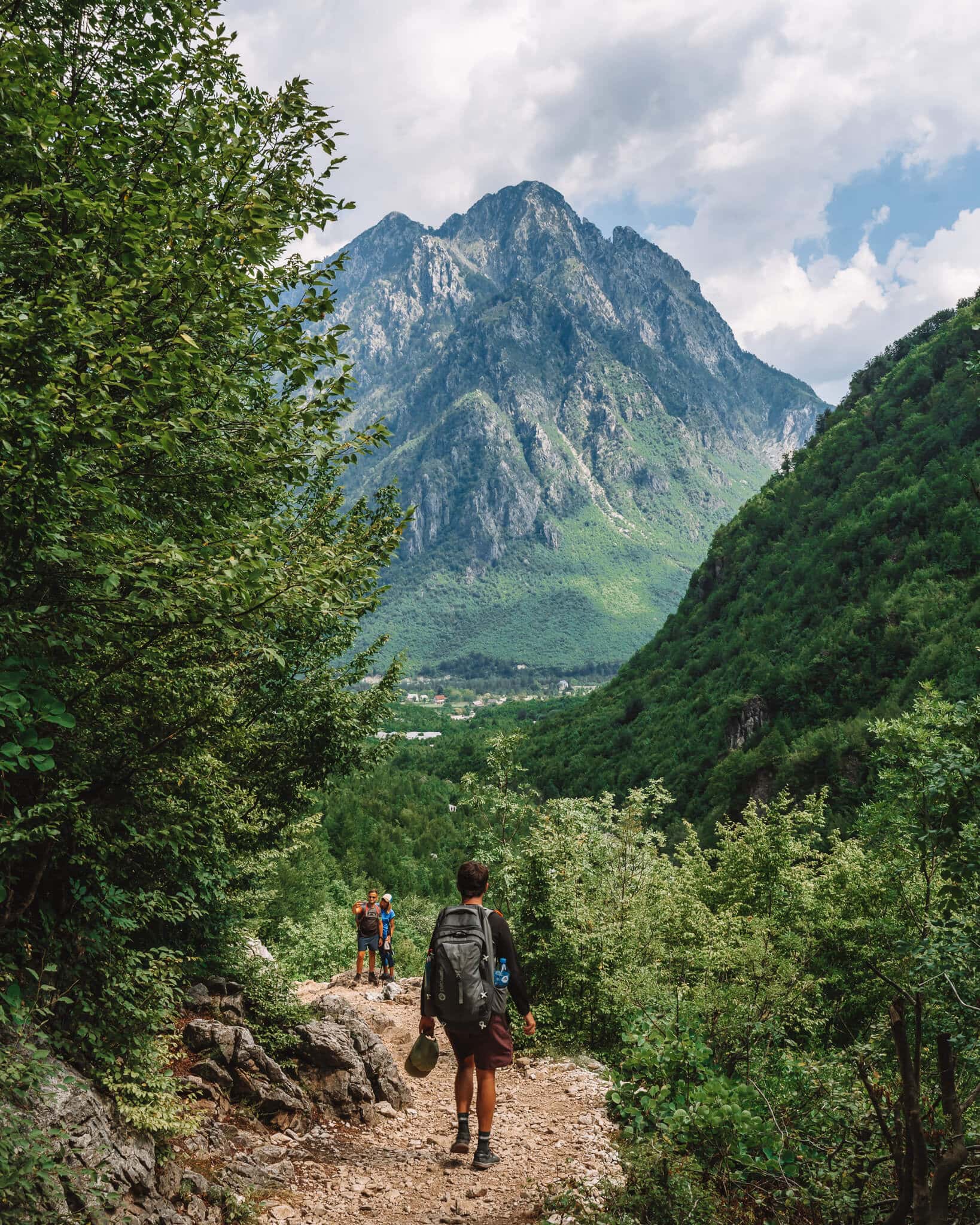
The trail to the Blue Eye begins where the paved road ends in Theth village, transitioning immediately onto a dirt and stone path that winds northeast along the Theth River valley. Within the first fifteen minutes, hikers encounter the route's defining characteristic: loose river stones that shift underfoot, demanding constant attention to balance and stride. The theth blue eye hike difficulty stems less from sustained climbing than from the nature of the surface itself. Elevation accumulates gradually—150 meters over three kilometers—but the path alternates between packed earth, exposed bedrock, and fields of baseball-sized cobbles deposited by seasonal floods. Two wooden footbridges cross tributary streams; during spring melt or after heavy rain, these crossings require wading through ankle-deep water. The route is never technically challenging in a mountaineering sense, yet it punishes inattention. Rolled ankles are the most common injury reported by the small clinic in Theth, nearly all occurring on the return descent when fatigue reduces caution. Fitness requirements align with what alpine guides call a "moderate day hike." Cardiovascular demand remains low—the gentle grade allows conversation throughout—but leg strength and ankle stability matter more than aerobic capacity. Visitors accustomed to flat, maintained park trails often underestimate the cumulative fatigue of stabilizing against uneven ground for ninety minutes. Trekking poles, rarely seen on other Albanian trails, appear in the hands of roughly half the hikers heading to Syri i Kaltër, a tacit acknowledgment of the terrain's demands. The final approach narrows as limestone walls press in from both sides, and the path steepens briefly before emerging at the spring itself. The return journey retraces the same route, and many hikers report the descent as harder than the climb—the same loose stones now slide forward, and the cumulative impact on knees becomes evident. The trail remains passable year-round, though winter ice and spring runoff elevate the challenge from moderate to difficult, and local guesthouses discourage attempts without crampons between December and February.
“The trail punishes inattention more than it taxes endurance—loose stones demand focus on every step.”
The Blue Eye hike from Theth village is a moderate 3–4 hour return trek across riverbed paths and loose stone terrain, demanding steady footing and basic mountain fitness.
The marked path begins behind the church near the main village square and crosses wooden footbridges over the Theth River. Many hikers miss the second bridge and continue along the wrong bank, adding 20 minutes of backtracking.
The trail descends into a wide, rocky riverbed where painted stone cairns mark the route across shifting gravel. Wear ankle-supporting boots—twisted ankles are common here when hikers attempt the crossing in trail runners.
After the riverbed, the path ascends through beech forest on loose, uneven steps that become slippery after rain. Trekking poles reduce knee strain on the descent, which claims more energy than the ascent for most visitors.
The trail narrows and steepens for the last 400 meters, with exposed tree roots and minimal shade. The Blue Eye spring sits in a small clearing; the return uses the same route, so note landmarks at trail junctions to avoid wrong turns on the way back.
To manage the hike difficulty effectively, plan your arrival between 07:00–09:00. This window helps you avoid mid-day crowds and the peak heat of the summer months.
Mild temperatures (15°C–22°C). Trails are clear and water levels are high.
Hot temperatures (25°C+). High humidity increases physical exertion.
Cooler, stable weather (12°C–20°C). Conditions are optimal for sustained trekking.
—. These periods offer the quietest experience on the trail.
Verdict: The best time to visit is from Tuesday to Thursday, arriving at the trailhead between 07:00–09:00 during the months of September or October.
The trailhead to the Blue Eye is located in the village of Kaprre, within Theth National Park. Visitors typically arrive in Theth via road before proceeding to the start of the hike.
SH21 road via Shkoder to Theth
Minibus from Shkoder city center to Theth
Private transfer from Shkoder to Theth
Local trails from Theth village center to Kaprre
For the best experience, plan your arrival to the trail start between 07:00–09:00. This window helps you avoid mid-day crowds and peak heat.
The Blue Eye in Theth National Park remains accessible 24 hours a day. Visitors may enter the trail at any time.
This moderate mountain trail requires proper footwear, navigation tools, and readiness for steep, uneven terrain.
Everything you need to know about theth blue eye hike difficulty
The theth blue eye hike difficulty is generally rated as moderate, involving a significant trek through rocky terrain and mountain paths. Hikers should be prepared for steady inclines and a long duration that requires decent physical stamina. Many visitors find the theth blue eye hike difficulty manageable if they maintain a steady pace and wear proper footwear. While the theth blue eye hike difficulty may be challenging for young children, active families often complete the route by planning for frequent breaks. It is important to assess your group's fitness level before committing to this trek. To ensure a peaceful experience and avoid peak heat, start your trek between 07:00–09:00. This early arrival window allows you to navigate the path before the majority of midday visitors arrive. There is a 0 ALL entrance fee for this natural site. You do not need to pay any official conservation fee to access the trail. Pack sturdy hiking boots, sufficient water, and high-energy snacks to sustain your energy levels during the trip. Carrying a light rain jacket is also advised due to changing mountain weather conditions. The trail is well-trodden but can be uneven, so stay focused on the path to ensure safe footing. While the route is not technically dangerous for experienced walkers, it requires caution, especially near the steeper sections of the Kaprre trail.