
4 hr
Blue Eye Spring & Lekursi Castle Sunset Tour from Sarande
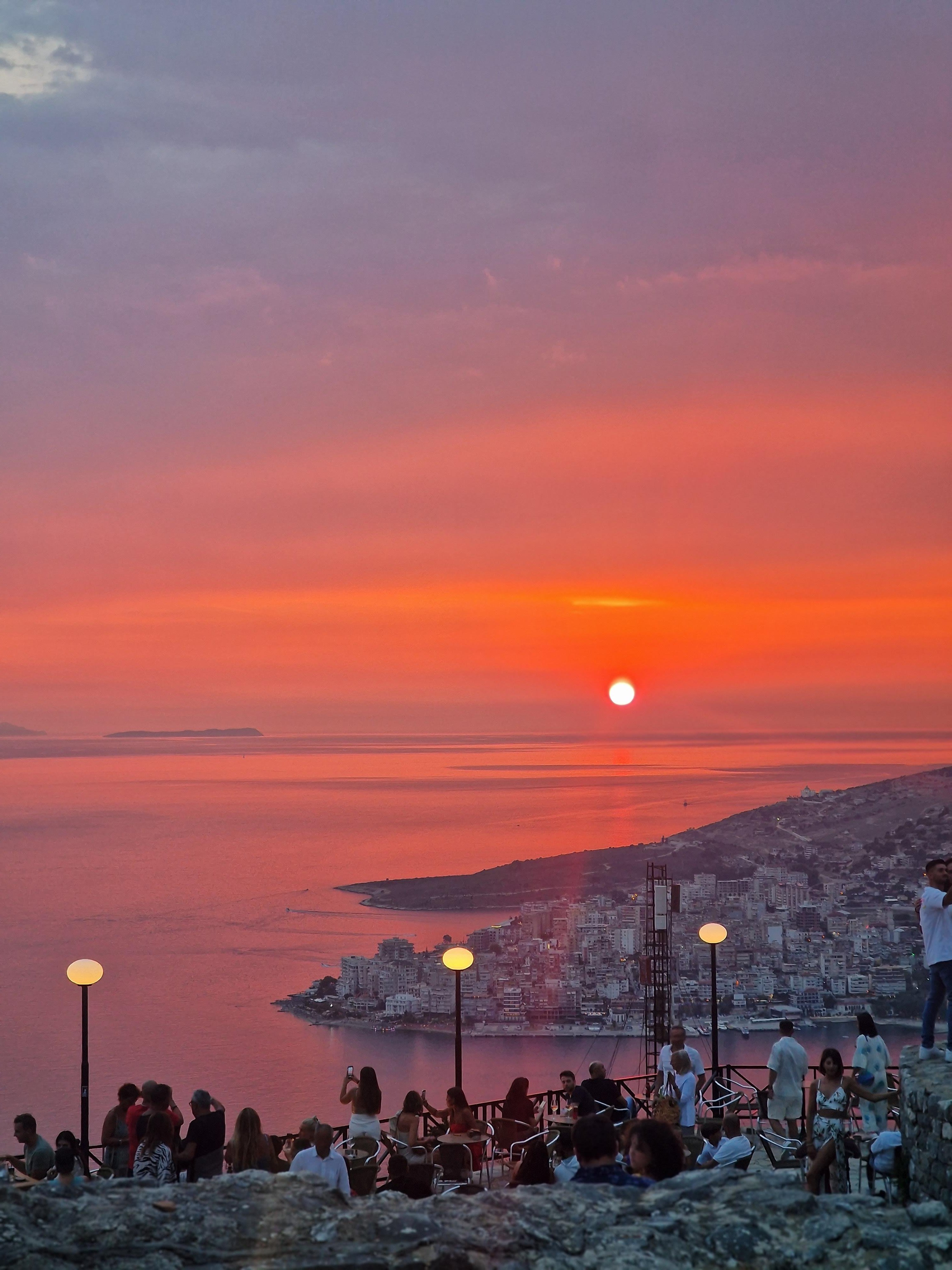
Half-day journey to Albania's stunning natural spring and hilltop fortress for golden hour views
Reserve
Hand-picked by our editors — only the best 5 experiences from 47 reviewed.
Verified partners for every tour, free cancellation where available, and instant confirmation on every booking.
4 hr
Half-day journey to Albania's stunning natural spring and hilltop fortress for golden hour views
Reserve
7 hr
Explore a UNESCO stone town, crystal-clear natural spring, and hilltop fortress in one unforgettable day
Reserve
4 hr
Journey to Albania's stunning natural spring, then watch golden hour unfold over the Ionian from a historic fortress
ReservePrices from verified partners. Availability updates in real time at checkout. Free cancellation policies apply where shown.
The landmarks, rooms, and views travelers on this tour remember — all visible on a single visit.
A natural karst spring pool featuring deep, vibrant turquoise waters fed by mountain snowmelt.
A series of small waterfalls and rapids feeding into the primary pool area.
Dramatic limestone gorge providing a scenic backdrop for the trail leading to the Blue Eye.
The geological feature surrounding the spring that creates the unique blue-green light refraction.
A traditional wooden crossing on the trail that offers vantage points of the river.
These two sites are located at opposite ends of Albania; most visitors who do both call the Theth Blue Eye day trip the more rewarding physical adventure while favoring the Saranda location for its convenience. Booking theth blue eye day trip tours allows travelers to experience remote mountain terrain, whereas the southern site offers a quick, accessible visit to a karstic spring.
| Feature | Top pick Theth Blue Eye | Saranda Blue Eye |
|---|---|---|
Location |
Theth National Park (North) | Near Saranda (South) |
Access |
Remote mountain road and trail | Paved road and short walk |
Hiking requirement |
Moderate 1.5–3 hour hike | Easy 10 minute walk |
Landscape |
Cascading waterfall and canyon | Deep forest karstic spring |
Typical visitor type |
Hikers and nature enthusiasts | Casual tourists and families |
| See tickets → |
Verdict: Choose the Theth blue eye day trip tour for rugged wilderness, or select the Saranda location if you prefer immediate accessibility without needing theth blue eye day trip tickets for long mountain treks.
Choose your ticket, select your date, and reserve in under two minutes. Secure checkout handled by our verified partner.
Instant confirmation by email, with a mobile voucher you can save offline. No printing, no queuing at a collection desk.
Arrive at the entrance, show your voucher on your phone, and walk in. Most tickets include priority or skip-the-line access.
Practical details for your visit straight from our verified partners — hours, access, rules, and how to get there.
Main Theth Road
Central valley meeting point
Drive to Nderlysaj village parking
Hire local transport in Theth
Wear sturdy hiking boots with good grip for rocky terrain. Layered moisture-wicking clothing is recommended for changing mountain temperatures.
Carry a lightweight daypack for essentials. There are no lockers at the spring, so keep belongings with you at all times.
Theth Blue Eye day trip photography thrives in early morning light. Use a polarizing filter to capture the vibrant turquoise water clarity.
The trail to the Theth Blue Eye involves uneven, steep mountain paths. It is not suitable for individuals with limited mobility.
Cellular service is unreliable deep in the Theth valley. Download offline maps before beginning your Theth Blue Eye day trip.
Theth Blue Eye day trip tours are suitable for active families with older children. Ensure minors are supervised near the icy water's edge.
Carry sufficient water and snacks from Theth village. Limited dining options exist near the Nderlysaj trailhead.
Pets are permitted if leashed. Keep them away from the fragile ecosystem surrounding the spring during your Theth Blue Eye day trip.
Theth Blue Eye day trip tickets are not required as site access is free. Respect the natural environment and leave no trace.
Best time to go, insider tips, nearby landmarks, and the cancellation fine print — flip through to skim what matters to you.
How crowds, weather, and events shift across the year.
Snowmelt fills the basin for peak vibrancy; trails reopen in May.
Warmest weather for the Theth Blue Eye day trip; busy trails.
Mild temperatures and golden foliage; ideal for photographers.
Often inaccessible due to snow; avoid unless experienced.
Small details that turn a good visit into a great one.
Start your Theth Blue Eye day trip by 07:00 to enjoy the serenity. Early arrival ensures the best lighting for photography.
Park at the Nderlysaj trailhead to save 2-3 hours of walking. This makes your Theth Blue Eye day trip more manageable.
The water is extremely cold, typically 5-8 degrees. Dip your feet with caution rather than jumping in.
Follow the red and white markers closely. The path can be misleading for those on their first Theth Blue Eye day trip.
Non-bookable sights within a short walk — free to visit, easy to pair.
Cascading falls in a forested gorge
Historic stone tower in Theth village
Iconic stone structure in the valley
Flexible, no hidden fees.
Full refunds are provided for cancellations made within the operator's specified booking window. This Theth Blue Eye day trip includes free entry as per the 0 EUR entrance fee policy.
Hand-picked options within walking distance — pick a district for vibe, or a specific hotel for convenience.
Traditional hospitality in Theth
Comfortable villas with mountain views
The Kaprre spring emerges at 1,950 meters above sea level, fed by an underground river system that drains snowmelt from the Accursed Mountains across a catchment spanning forty square kilometers. Local hydrogeologists have traced the flow to sinkholes near the Valbona Pass, eight kilometers northeast, where meltwater vanishes into fractured Triassic limestone and reappears three days later as a circular pool sixteen meters across. The spring maintains a constant temperature of six degrees Celsius year-round, and visibility extends beyond twelve meters in summer months when sediment loads drop. Theth Valley, carved by the Shala River over two million years, remained roadless until 1986, preserving a network of stone towers and blood-feud refuge houses that now anchor the national park's cultural heritage zone. The spring anchors the southern end of a trail network connecting Theth to Valbona through high passes that functioned as smuggling routes during the Hoxha regime. Soviet-era topographic maps classified the entire valley as a border security zone, restricting civilian movement until 1992. Today the same trails serve trekkers moving between guesthouses scattered across eleven kilometers of valley floor. The Kaprre site lies forty minutes uphill from Theth's stone church, following a mule track that switchbacks through beech forest before opening onto alpine meadows grazed by sheep from May through October. Spring flow peaks in early June when snowpack above two thousand meters releases seventy cubic meters per hour into the aquifer. The pool's cyan color results from Rayleigh scattering in exceptionally clear water combined with white limestone substrate reflecting sunlight back through the water column. Dissolved calcium carbonate levels exceed three hundred milligrams per liter, depositing travertine terraces downstream at a rate of two millimeters annually. The site holds no infrastructure beyond a wooden footbridge installed in 2018 to prevent bank erosion. Theth National Park regulations prohibit swimming in the spring itself to protect endemic amphipod species identified in a 2014 survey, though the downstream pools remain open for wading. Morning light strikes the pool directly between seven and ten from April through September, eliminating shadows cast by the surrounding beech canopy.
"Meltwater vanishes into fractured limestone and reappears three days later as a sixteen-meter pool."
A step-by-step walkthrough of the visit — what you'll see, how long each stage takes, and the details that matter.
You leave the Theth valley floor at first light, following a dirt track that narrows into a stone-lined mule path within ten minutes. The trail climbs through oak and beech forest, crossing two wooden bridges over tributaries that run cold even in August. Forty minutes up, the canopy opens onto a sloped meadow where the path levels and the spring appears as a sudden circle of turquoise against gray rock. You approach the wooden viewing platform on the eastern bank, where the water is clearest and the depth visible to the limestone bottom twelve meters down. The spring surges continuously, sending ripples outward in concentric rings that distort the submerged rocks. You walk the perimeter on a narrow trail worn into the turf, passing the outlet channel where water spills over a low travertine dam and begins its descent through a series of terraced pools. Morning sun illuminates the pool from the southeast, turning the cyan water nearly white at the center. A wooden footbridge spans the outlet, offering a direct view into the current as it accelerates downstream. You return along the same path, reaching the valley floor by mid-morning while the air is still cool and the light sharp on the surrounding peaks.
No, entry is free. There is a 0 EUR entrance fee for the Theth Blue Eye.
The site is open 24/7, meaning you can visit at any time during your theth blue eye day trip.
Yes, but the water is ice-cold. Many choose to just dip their toes during their theth blue eye day trip.
No tickets are required for the Theth Blue Eye. You do not need to purchase theth blue eye day trip tickets.
It is suitable for active families. Ensure children are supervised throughout your theth blue eye day trip.
Arrive between 07:00–10:00 to avoid crowds and get the best lighting for your theth blue eye day trip.
It is a moderate hike. Many hikers find the walk to the Theth Blue Eye rewarding but tiring.
Bring your own food and water. There are minimal services during the theth blue eye day trip.
Bring sturdy shoes, water, and sun protection for your theth blue eye day trip.
Yes, you can drive to the village of Nderlysaj to start your theth blue eye day trip.